Composer, conductor and musical intellectual Pierre Boulez is 90 today! Antony Gordon has written a tribute to him on the IAML website:
Happy 90th Birthday, Pierre Boulez!
Thursday, 26 March 2015
Happy 90th Birthday, Boulez!
IAML, our professional music library association, commemorates Boulez's birthday:-


Monday, 23 March 2015
What if I need to find Beethoven Manuscripts?
The Morgan Library and Museum, in New York, has a website called Music Manuscripts Online - it could be just what you need! Why not take a look? (We've saved this link at our Library Music Portal on Moodle, so it's there when needed. Like for your forthcoming Beethoven essay, maybe?)
http://www.themorgan.org/music
From the website:- "The goal of the Music Manuscripts Online project has been to create and to provide online access to high-quality images and descriptions of music manuscripts owned by The Morgan Library & Museum. Works by J. S. Bach, Beethoven, Brahms, Chopin, Debussy, Fauré, Haydn, Liszt, Mahler, Massenet, Mendelssohn, Mozart, Puccini, Schubert, and Schumann, among many others, can be viewed on these pages. Images and descriptions of these manuscripts will be available on the Morgan’s Web site for study by scholars, musicians, and the general public."
Friday, 20 March 2015
Scottish Country Dance Database - could be useful!
We found this the other day:-
Scottish Country Dance Database
This database looks potentially useful for anyone involved in the Scottish country dance scene. Quoting from their homepage ...
"Overview
"This database aims to be a comprehensive resource for Scottish country dancers, dance teachers, and musicians. It brings together information on Scottish country dances, formations, musical recordings, Scottish country dance tunes, and the people behind all of those – all conveniently linked together for easy perusal.
"The database builds on the efforts of many people. Keith Napier and Peter Hastings pioneered the idea of indexing Scottish country dances and music. Alan Paterson started the project behind this database, compiling a very large repository of data and making it available to everybody. Eric Ferguson and Charles Upton, among others, have contributed cribs for dances. This web-based version was written by Anselm Lingnau, who is also hosting it on his server. Countless volunteers have helped organise, improve, and correct the data – an ongoing effort."
Thursday, 19 March 2015
What's Shakespeare Got to Do with Nationalism?
Ben Fletcher-Watson, one of our Royal Conservatoire of Scotland researchers, has uploaded his article about nationhoods and nationalisms in academic publishing, onto the scholarly social media site, Academia.edu.
Curious? (Hint: this is about cultural nationalism, not Shakespeare!)
Read it here:-
Curious? (Hint: this is about cultural nationalism, not Shakespeare!)
Read it here:-
Are You a Lutenist?
One of our own lecturers, Dr Peter Argondizza, has uploaded his paper about lute intabulations and fantasias, onto the academic social media website, Academia.edu.
You can read it here:-
You can read it here:-
Stuart Eydmann blogs about the Fiddle in the Scottish Folk Revival
Stuart Eydmann was Traditional Artist in Residence at the University of Edinburgh in 2013-2014. During that time he maintained a blog about the Fiddle in the Scottish Folk Revival.
You can access this useful blog here.
See, I'm Looking for this Old Scottish Song ...
A few years ago, the National Library of Scotland ran a pilot project to start indexing Scottish songs in early printed collections. Sadly, the test project didn't carry on to finish indexing every Scottish song in their collections, but it's still a useful resource. (Further funding would be required to see the whole thing through.)
We understand that the pilot database includes about 350 incipit titles and around 20,000 bibliographic title references. However, we don't know how many publications are completely listed in the pilot.
- Click here to access the Scottish Song Index Pilot Database.
- Introduction to the Pilot Project
We understand that the pilot database includes about 350 incipit titles and around 20,000 bibliographic title references. However, we don't know how many publications are completely listed in the pilot.
- Visit the National Library of Scotland Music Collections page here.
- Free access to the NLS Digital Gallery of music and much, much more - here.
Friday, 13 March 2015
Spotlight on The Stage - they have a new Website!
Actors, have you see The Stage's new website yet?
The magazine has been core reading for theatrical people since 1880. They've been online for ages, of course, but now they have a shiny new website:-
The magazine has been core reading for theatrical people since 1880. They've been online for ages, of course, but now they have a shiny new website:-
https://www.thestage.co.uk/
Theatre News, Reviews, Interviews ...
Tuesday, 10 March 2015
Music Tuesdays on Digital Theatre Plus tempts musicians with Brahms today!
Every Tuesday, Digital Theatre Plus shares something musical with the Royal Conservatoire of Scotland community. Today, it's Brahms' Symphony no.1. Click the link to view this new video release!
CLICK HERE.
CLICK HERE.
Monday, 9 March 2015
HELP WITH RESOURCES FOR RCS MUSIC HISTORY 2 ESSAY
If you're a 2nd year music student at The Royal Conservatoire of Scotland, then you just got lucky! We’ve been looking at the Music History 2 essay questions to
see how our online resources could help.
Here are some general hints. We'll be emailing more hints soon.
A You can often find a score online. Use
your computer’s snipping tool to copy little excerpts for examples. We subscribe to Alexander Street Press
Classical Scores Library (accessible online wherever you are), and Library
Music Source (accessible on site). You
probably already know about IMSLP (the Petrucci library), too.
B You can look for information in Groves
Dictionary – it’s part of Oxford Music Online. Check our e-resources page. http://www.rcs.ac.uk/about_us/libraryandit/databases/
C You can also find useful information on
JSTOR. Be clever with your searching –
if the essay is asking you to link concepts (eg Liszt and literature), make
sure your search terms reflect that. Check our e-resources page. http://www.rcs.ac.uk/about_us/libraryandit/databases/
D If a piece of music has an English title as
well as its original title, search both!
E There’s nothing wrong with older
literature, if it informs the question you are answering. However, do remember
that opinions may have changed, if an article is very old indeed!!
F Search keywords in our catalogue. http://capitadiscovery.co.uk/rcs/ Start with a precise search (eg the composer’s
name and perhaps the piece) then broaden
it if you don’t get what you need. If
you don’t find the right information under a composer’s name, try MUSIC HISTORY - and maybe the century
you’re interested in. If you’re
off-site, limit your results to e-books to see if there’s anything you can read
online.
G You can stream music by Naxos or Alexander
Street Press Music Library. Check our
e-resources page. http://www.rcs.ac.uk/about_us/libraryandit/databases/
H There are also plenty of electronic
journals on the e-journals page. Start
by looking for suitable journals under the List of Music Titles. http://www.rcs.ac.uk/about_us/libraryandit/e-journals/
We're the very helpful Whittaker Library, here to help students and staff of the Royal Conservatoire of Scotland with their information requirements.
We're the very helpful Whittaker Library, here to help students and staff of the Royal Conservatoire of Scotland with their information requirements.
National Jazz Archive Goes Digital
National Jazz Archive
Archives are hip! Far from being dreary, dusty places, they now have digital content as well as valuable old archival resources.
Especially the National Jazz Archive! We've just heard about about the completion of a big project to digitize numerous journals, photos, posters and programmes for direct access via the redesigned website, which includes a timeline of British jazz, over 360 interviews, and cross-curricular learning resources.
Sounds perfect for our jazz students, doesn't it?
Visit the National Jazz Archive Website:- http://www.nationaljazzarchive.co.uk/
Visit the National Jazz Archive Website:- http://www.nationaljazzarchive.co.uk/
Here's the full story:-
Success for National Jazz Archive ‘Story of British Jazz’ project The extensive resources of the National Jazz Archive have been opened up by a project funded by the Heritage Lottery Fund.
The successful three-year project ‘The Story of British Jazz’ has significantly improved public access to the National Jazz Archive’s rich and diverse holdings and reinforced its position as the principal national resource for jazz heritage in the UK.
Key achievements:-
- storing and conserving more than 40,000 archive items (journals, photos, posters and programmes;
- cataloguing more than 4300 books;
- cataloguing more than 600 journals along with 36 personal and seven photo collections;
- scanning and digitising numerous journals, photos, posters and programmes for direct access via the redesigned website, which includes a timeline of British jazz, over 360 interviews, and cross-curricular learning resources;
- organising more than 30 talks, open days, exhibitions, concerts, community events and family activities; training volunteers in storage, preservation and cataloguing skills.
Lesley Walker, Project Monitor for the Heritage Lottery Fund, said: “Over the past three years I have watched the National Jazz Archive develop into an active and lively organisation with properly catalogued and managed collections, reaching out to a much wider audience including their local communities. There is now a greater awareness within and beyond the jazz community of the Archive and its activities and ‘The Story of British Jazz’ makes the collection accessible to people everywhere.”
The National Jazz Archive is a registered charity based in Loughton Library in Essex. It holds the UK’s finest collection of written, printed and visual material on jazz, blues and related music, from the 1919 to the present day. The Archive holds more than 4000 reference books, specialist periodicals and bulletins spanning over 600 titles, archival material, artwork, ephemera and photographs.
It is open on Monday, Tuesday, Wednesday and Friday from 10am to 1pm.
The Archive’s vision is to ensure that significant jazz material is safeguarded for future generations of enthusiasts, professionals and researchers.
Friday, 6 March 2015
Robert Burns Thought Scottish Songs should be Performed Like This
A few years ago, we posted a blog entry about William Tytler. Never heard of him? Well, he lived a long, long time ago.
Nonetheless, we think Robert Burns may have been influenced by William Tytler's "prescription" for good Scottish song performances. He could have read Tytler's dissertation - it was published in several different books. Or he could have read Joseph Ritson's book, Scotish Songs, where Ritson quoted from Tytler's dissertation.
So, let's find out more about what Tytler said.
REBLOGGED:-
On 12th September, 1792, William Tytler died at the grand old age of 81. Scottish musical history owes much to Tytler.
Tytler (1711-92) was an Edinburgh lawyer and historian. A founder member of the Society of Antiquaries of Scotland in 1780, his A Dissertation on the Scottish Musick was an influential commentary on the history of Scottish music for antiquarians and collectors of the late eighteenth and early nineteenth centuries.

It was first published in Hugo Arnot’s The History of Edinburgh, attributed to ‘a learned and ingenious friend’, in 1779 (and again in 1788). It also appeared under Tytler's name in 1783 and 1790, and was later read at a meeting, and subsequently published in 1792, in the first Transactions of the Society of Antiquaries of Scotland.
Tytler wanted to track down the origins of the earliest melodies, ‘and to trace the history of our music down to modern times.’ His comments were influential upon the song collection compilers who followed him - Johnson, Burns and Ritson. Tytler’s pronouncement about the correct kind of accompaniment for Scottish song became almost a ‘gold standard’ for contemporary antiquarian publishers of song collections.
Nonetheless, we think Robert Burns may have been influenced by William Tytler's "prescription" for good Scottish song performances. He could have read Tytler's dissertation - it was published in several different books. Or he could have read Joseph Ritson's book, Scotish Songs, where Ritson quoted from Tytler's dissertation.
So, let's find out more about what Tytler said.
REBLOGGED:-
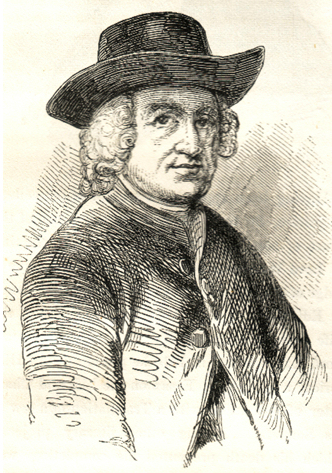 |
| William Tytler (image from ElectricScotland) |
Tytler (1711-92) was an Edinburgh lawyer and historian. A founder member of the Society of Antiquaries of Scotland in 1780, his A Dissertation on the Scottish Musick was an influential commentary on the history of Scottish music for antiquarians and collectors of the late eighteenth and early nineteenth centuries.
It was first published in Hugo Arnot’s The History of Edinburgh, attributed to ‘a learned and ingenious friend’, in 1779 (and again in 1788). It also appeared under Tytler's name in 1783 and 1790, and was later read at a meeting, and subsequently published in 1792, in the first Transactions of the Society of Antiquaries of Scotland.
Tytler wanted to track down the origins of the earliest melodies, ‘and to trace the history of our music down to modern times.’ His comments were influential upon the song collection compilers who followed him - Johnson, Burns and Ritson. Tytler’s pronouncement about the correct kind of accompaniment for Scottish song became almost a ‘gold standard’ for contemporary antiquarian publishers of song collections.
- Royal Conservatoire of Scotland - for books on Scottish music history in the Whittaker Library, click here.
- Check COPAC (UK national and university libraries) to find your nearest copy of a Tytler source.
- We have a photocopy of Tytler's dissertation in our own library - here. (We downloaded it from Archive.org)
Thursday, 5 March 2015
Glasgow Music Research - the University has a new Blog
Are you curious to know what other music researchers are up to? Sneak a peek over the fence at the neighbours ....
Music Research @ Glasgow:- Music Research at the University of Glasgow
Music Research @ Glasgow:- Music Research at the University of Glasgow
Digital Knowledge comes in many shapes and sizes - try Sage Journals
This week there's a reminder from one of our e-journal providers, Sage Journals, that there's loads of information just waiting for staff and students of the Royal Conservatoire of Scotland. It's accessible 24:7 through the library website, and also via Moodle and Mahara.
Sage's message:-
If you like Sage Journals, you'll love Sage Knowledge. We blogged about it earlier this week - why not take a look, here?
Sage's message:-
"Did you know that thanks to your librarian, you and your colleagues have access to hundreds of highly downloaded and cited articles, all available on the award-winning SAGE Journals platform?"Search now across SAGE Journals (you'll need to login if you're off-campus. Choose the Conservatoire from the list of colleges and universities, then use your usual RCS login.)
If you like Sage Journals, you'll love Sage Knowledge. We blogged about it earlier this week - why not take a look, here?
Tuesday, 3 March 2015
Who was Mrs Garden of Troup?
Mrs Garden of Troup's Strathspey was so very popular, we thought we'd ask:- who was Mrs Garden of Troup?
Leave us a comment if you know!
Leave us a comment if you know!
Monday, 2 March 2015
Digital Knowledge is More than Journals!
For example, we were reminded by the big international academic publisher, Sage, that we have access to Sage Knowledge - and this is in addition to all the journal content that we can draw upon. Maybe you aren't signed up to Sage, though, so let's share what we've got ... starting with the message they sent ...
Sage Knowledge functionality is developed in partnership with faculty, librarians, and students - and that means:-
http://knowledge.sagepub.com/
"You have access to SAGE Knowledge eBooks
"Thanks to your library at Royal Conservatoire of Scotland, you and your colleagues have access to SAGE Knowledge. SAGE Knowledge is the ultimate social sciences digital library for students, researchers, and faculty. It includes an expansive range of SAGE eBook and eReference content, including scholarly monographs, reference works, handbooks, series, professional development titles, and more.
"You have access to 5 SAGE Knowledge collections which include in-depth coverage of the following subject areas: Business, Management, Education, Sociology, Psychology, Health, Social Care.
"Start exploring the key titles in your area of interest now! Learn more about SAGE Knowledge in this video."Think about it - do you need business skills as a creative artist? Do you need to brush up on teaching skills or the psychology behind learning? Are you managing a project? Working in the community? Interested in music or drama therapy?
Sage Knowledge functionality is developed in partnership with faculty, librarians, and students - and that means:-
- User-friendly interface
- Full text HTML display
- Book portal pages
- Table of contents navigation
- Email Chapter Link and Share features for social sites
- Ability to change text size easily
- Chapter print and PDF download options
- Citation options including export to End Note, RefWorks and other citation manager software
Subscribe to:
Posts (Atom)