Library and Information Services, Royal Conservatoire of Scotland

Sunday, 10 August 2014

What Makes A Good Blog? Twelve Tips for Library Bloggers

WHAT MAKES A GOOD BLOG?

We looked at our blog traffic over the past month.  How many people actually visited, and were there any patterns?  Well yes, actually – there were!

  1. The bottom line is, you have to keep posting.  If you don’t post, the visitors don’t visit.  The more you post, the more they visit. 
  2. Schedule your blogposts! You can schedule in Blogger and Wordpress.  This helps take care of days when you know you won’t be around to post.
  3. Be sure to share your posts on Twitter, and use something like Bufferapp to schedule tweets too:  http://bufferapp.com
  4. Take care with headings.  Once you’ve uploaded your post, the hyperlink won’t change. So use catchy headings with words that Google can find; you can change the blogpost heading later if you need to.
  5. Always add keywords/tags.  Try to make these consistent over time.
  6. Know your audience – what makes them tick?
  7. Know your product – we’re a library, so our main concern is to promote physical and electronic resources, not to mention our ever-helpful library staff! 
  8. In a library context, e-resources attract interest.  So does copyright, interesting new stock, musicians’ health, music competitions, creativity, learning and research skills, and employability. 
  9. Weblinks are good.  Readers want to know where they can find more.
  10. Don’t try to write a scholarly essay, and keep the blogposts a reasonable length.
  11. Have a conversational tone: expressions like “the musicologists amongst us” are not inclusive, and won’t really even attract the musicologists!  You want readers to react with, “Hey, this is for me!”, and not “Oh, stuffy academics again”. 
  12. Be the same age as your audience.  No, that’s silly – obviously we’re kidding!  Your audience could be any age.  Students can be any age.  Staff can be marginally older than students, or heading for retirement.  You cannot be the same age as your audience, but you can try to ensure that your posts will appeal to as wide an audience as possible.


Don't Tell Your Mum (You've Bought Hearing Protection Without Being Reminded!)

Musicians these days take care of their hearing - simple as that.  Find out more on the Action on Hearing Loss website.  HERE.

It's cool to look after your lugs!

Friday, 8 August 2014

Music of War - A Conference

 The Music of War: 1914–1918 

Conference, 29-31 August 2014 

  British Library.

"A final reminder that *The Music of War: 1914–1918* conference takes place from 29-31 August 2014 at the British Library.

"Held as part of the British Library’s Centenary events programme, the conference includes a screening of the WWI silent film ‘Pax Aeterna’, the performance ‘War, Women and Song’, and a wine reception.

"To view the programme and register for the conference, please visit: http://www.themusicofwar.org

Keynote speakers:
Dr Kate McLoughlin (Birkbeck, London)
Professor Rachel Cowgill (Cardiff University)

Roundtable Session:
Professor Rachel Cowgill (Cardiff University) Lewis Foreman Professor Barbara Kelly (Keele University) Dr Kate Kennedy (University of Cambridge) Chaired by Dr Toby Thacker (Cardiff University)

For conference-related enquiries, please contact: themusicofwar@gmail.com

Generously supported by:
The British Library
Royal Musical Association
Music & Letters Trust
The Oxford Research Centre in the Humanities

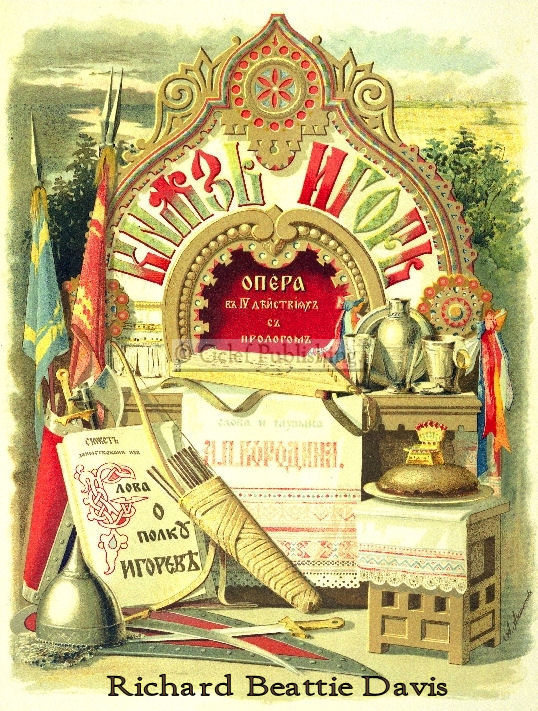
The Beauty of Belaieff, by Richard Beattie Davis

The historic Russian music publishing house, Belaieff, produced startlingly beautiful covers for their scores.  The Whittaker Library at the Royal Conservatoire of Scotland has today been gifted a copy of the late Richard Beattie Davis' book, The Beauty of Belaieff.  

Like the collection, the book itself is beautiful. 


  •  More about the book itself HERE.
  • Find it in our collection, HERE. 

Richard Beattie Davis (1922-2008) was an English musicologist and collector.  His collection is now in Florida Atlantis University - the Davis Music Collection.


Book Review


A lifetime’s dedicated research has gone into Richard Beattie Davis’s magnificent book, The Beauty of Belaieff.  Describing Mitrofan Petrovich Belaieff as ‘more an enabler than a creator’, Davis documents the impressive music publishing house that this wealthy timber merchant established in middle life.  Belaieff’s publishing output is in itself a record of an epoch in Russian music, and Davis’s book devotes chapters to each of the 18 composers that Belaieff promoted.


The publication in colour of over one hundred and fifty title pages makes this volume handsome enough to merit the epithet, ‘coffee-table book’ as well as being a serious study, for these illustrations both enhance and inform the extensive text.  Music title pages are a rather unique art-form, and although this volume is not a history of Belaieff’s commissioned art-work per se, it goes without saying that Davis does provide commentary on them.

Davis systematically collected Belaieff publications on a grand scale, and his research embraced published histories, reference works, a vast amount of correspondence between Belaieff and his composers, not to mention extensive library visits.  It is gratifying, and humbling, to consider that Davis's initial researches in Westminster Music Library, and then in other libraries, were to bear fruit in such an admirable monograph.  Books of this stature are a welcome endorsement of the importance of specialist music libraries to music-lovers and researchers, and underline not only their important function of retaining old and perhaps forgotten music for posterity, but also the ‘enabling’ role that their staff are able to offer.

Dr Karen E. McAulay   
 

New Dance resource

Check out the new Dance resource from the Whittaker Library!

Dance in Video: Volume I contains five hundred hours of dance productions and documentaries by the most influential performers and companies of the 20th century. Selections cover ballet, tap, jazz, contemporary, experimental, and improvisational dance, as well as forerunners of the forms and the pioneers of modern concert dance.

http://search.alexanderstreet.com/daiv

Mozart as Medicine: The Health Benefits of Music, on James Clear's Website

Music's power on the emotions is well-documented.  This article on life-coach James Clear's website comes with useful scholarly references.  Read the article HERE.

http://jamesclear.com/music-therapy

Clear worked with David Binanay and Sam Sager on this article.

Getting Into Naxos Music Library

Streaming Music via the Whittaker Library

 Are you a registered student or staff member of the Royal Conservatoire of Scotland?  We subscribe to Naxos Music Library and Alexander Street Press Classical Music Library so you can stream (almost) to your heart's content.

The easiest way in is to visit the Whittaker Library Electronic Resources page..   This gives you access to all our e-resources. We also have a Mahara page.

Naxos is one of the few subscription services we offer, that does NOT use the conventional Shibboleth institutional login system.  Access is different for campus use and off-site use.  Campus access is automatic, needing no password.  Registered students and staff of RCS should contact the Whittaker Library for the off-campus password. 


Extra information
  • Are you on campus right now?  Registered RCS students and staff can get quick access to Naxos without visiting our e-resources page, by using the following link, which only works internally:-

    http://rcs.naxosmusiclibrary.com

  • Naxos.com will NOT take you to our Naxos Music Library subscription service, but to their commercial website, whilst Naxosmusiclibrary.com is an invalid address. 

Thursday, 7 August 2014

Repertoire for String Quartet? For 2 Oboes and Bassoon?

Parts for your Ensemble

at the

Royal Conservatoire of Scotland

Did you know you can search the Whittaker Library catalogue for a particular chamber music combination?  So if you want repertoire for your quartet, wind trio, or any other combination, just learn how to enter the ensemble code.

Like this:- 


String quartet music, anyone?  We have heaps of it!  Look HERE.

Appropriately, a Legacy Collection of Ballad History which has its own Story


Part of the appeal of ballads and balladry is the nostalgic links back to the misty past.  What, then, could be more appropriate than a gift to the Whittaker Library of a collection of ballad books, with its own collection history?  Folk singer Pete Coe facilitated this donation, from the daughter of the late Eric Cowell.  Whilst you may not have heard of Eric Cowell before, he was in fact the great-nephew of one of the last great Victorian antiquarians, Frank Kidson.  In fact, Eric's wife Ray did some research into Frank Kidson's life, which you can read here: The Search for Five-Finger Frank.

We don't know much about Eric Cowell himself, but his memory will live on in the Whittaker Library at the Royal Conservatoire of Scotland.  Some of his books are very special indeed, and all will be made very welcome by our staff and students of English, Scottish and Border ballads.  They include Motherwell's original collection and a late Victorian reprint of the infamous Remains of Nithsdale and Galloway song by R H Cromek.

There is the sense of the wheel coming full circle when one considers that Eric might just  have discussed some of these very texts with his great-uncle Frank!

Success in Research - Useful Series in Whittaker Library


We’ve got several new books in this series now.  Here are the two latest ones, about presenting your research and achieving impact in research.  And there's another about to be catalogued, on publishing journal articles. 

Find the series in our catalogue, HERE.

Awa Tae Scuilwab! (Improve Your Scots Language Skills)

The other day, we blogged about Scuilwab's grown-up cousin, the Dictionary of Scots Language.  But if you haven't encountered Scuilwab, then you've only seen one side of the picture.  Scuilwab is another website about the Scots language, this time with an educational slant.  It's intended for anyone from nursery school teachers to university level folk wanting to improve their Scots language skills.

If you're a folk singer (see if you can find the ballads!), a trainee teacher, or just curious, why not take a look? 
And if someone tells you to "Awa an' bile yer heid!"?

There's a Mars bar for the first Royal Conservatoire of Scotland registered reader to find a translation on Scuilwab or the Dictionary of Scots Language.  (Post the link as a comment here.)  If you can't find it, try the Urban Dictionary, but there's no Mars bar for that!

Tuesday, 5 August 2014

STV News: Alex Salmond and Alistair Darling prepare to clash

The Royal Conservatoire of Scotland is hosting what STV describes as a "landmark live television clash" tonight, as they debate the independence issue.  Read the STV story HERE.  

Meanwhile, you can read about historic but perhaps less well-known clashes about Scottish and English folksongs right here on Whittaker Live.  Centuries ago, these lively debates about the origins of certain Scottish songs were less earth-shattering but still stirred up strong feelings!

Monday, 4 August 2014

Is this Song Scottish, or English? Is it even Genuine?

Karen has spent some time pondering these questions when she researches historic Scottish song.  As far back as the 18th century, song collectors were debating the nationality of the material they collected.  

For example, take Joseph Ritson.  He was from the north east of England, but made collections of both English and Scottish songs.  A stickler for detail, it mattered enormously to him that everything was well-documented and annotated.  The antics of other less scrupulous collectors really annoyed him.  (In fact, he called himself "Anti-Scot", but he was actually anti-John Pinkerton and most particularly, anti-James MacPherson, of Ossian fame.  He was certainly not anti Scottish music.)

A century later, the English ballad collector William Chappell similarly got himself into hot water by suggesting some old Scottish songs were really English.  You can read more about the whole issue here in 'From ‘Anti-Scot', to ‘Anti-Scottish Sentiment': Cultural Nationalism and Scottish Song in the Late Eighteenth to Nineteenth Centuries'.

William Motherwell, the 19th century ballad collector, was another person who strenuously asserted his meticulous approach to ballad-collecting. However, his friend Robert Archibald Smith said the songs in the Scotish Minstrel  were all genuine, but we know from his correspondence with Motherwell that this wasn't entirely true.  The same goes for Scottish poet Allan Cunningham.

By the end of the 19th century, attitudes were becoming more relaxed.  In later editions of Wood's Songs of Scotland (initially edited by George Farquhar Graham), there was more chance of 'Scottish songs' being accepted as Scottish by repute as much as by established origin.

Where does that leave The Ashokan Farewell and Highland Cathedral?  We wouldn't venture to comment!

Useful resources in the Whittaker Library:-

Sunday, 3 August 2014

Waiting for Whittaker?

Whittaker is taking a couple of day's holiday, but "he" will be back very soon.  Look for his scheduled posting on Scottish songs and arguments about where they came from!  It'll go live on Tuesday afternoon.

Friday, 1 August 2014

Time for the Martyn Bennett Prize

The Martyn Bennett Prize for traditional music composition


How to enter - visit the website HERE. From the competition website:-

Timetable

Mon 7 July 2014 Competition Open
Mon 1 September 2014 Closing Date
Tue 16 September 2014 Shortlist Announced
Thu 9 - Tue 14 October 2014 Shortlisted composition rehearsals
Tue 14 October 2014 Finalists’ Concert/Award of the Martyn Bennett Prize for Traditional Music Composition

Thursday, 31 July 2014

Music Librarians Go Abroad

We're members of IAML - the International Association of Music Libraries.  Karen posted a 'conference diary' entry on the IAML website, after attending and speaking at the 2014 conference in Antwerp earlier this month.  You can read it HERE.