When not promoting online resources and librarianly expertise, Karen sometimes finds herself peacefully cataloguing 'finds' from the past.
See what glee clubs were singing in the early nineteenth century ...
The Harmonist
Performing arts blogging by the Whittaker Library at the Royal Conservatoire of Scotland.
Library and Information Services, Royal Conservatoire of Scotland
Library Website: https://www.rcs.ac.uk/about_us/libraryandit/
Showing posts with label 19th century. Show all posts
Friday, 16 January 2015
Friday, 24 October 2014
Flautists, Have You Heard of Yorkshire-Born Composer John Townsend?
We've come across an article about John Townsend by Tom Moore, of Florida International University. He was active in the north of England in the mid-nineteenth century. You can read it HERE.
You can follow lecturer Tom Moore on Academia.edu, where more of his writings can be found. HERE.
"The music for unaccompanied flute by John Townsend in the manuscript volumes of the Hitchcock Collection"
You can follow lecturer Tom Moore on Academia.edu, where more of his writings can be found. HERE.
Friday, 28 June 2013
Unsung Composers: interesting website
Mysterious but Useful
Unsung Composers Forum
The somewhat prosaic appearance is misleading: this discussion forum is a useful website for looking up forgotten and little-known composers of the Romantic era.
| http://www.unsungcomposers.com/forum/ |
Whittaker hasn't established the origin of this forum, but can advise that it's 'powered by Simple Machines® Forum (SMF) software', which seems to facilitate a number of forums. And it works! I looked up Otto Mans the other day - found all I needed to know - and today I looked up Armas Jarnefelt. Not only did I find biographical details - I even found a CD of the Berceuse for Violin and Orchestra, which I've been playing as an organ arrangement. Very handy! (And beautiful, actually.)
Thursday, 14 March 2013
Fred Freeman - Complete Tannahill Songs
Did you attend the Knowledge Exchange talk on Monday 5 March?
The Whittaker Library has all three volumes of The Complete Songs of Robert Tannahill - do come and hear them!
Three CDs in the Catalogue
The Whittaker Library has all three volumes of The Complete Songs of Robert Tannahill - do come and hear them!
Three CDs in the Catalogue
Friday, 1 March 2013
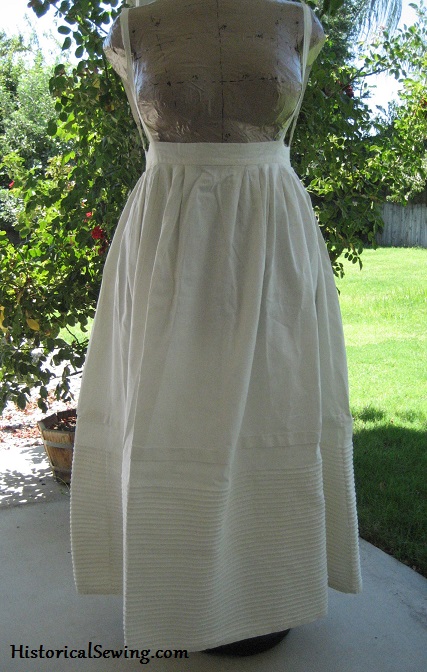
19th Century Costume Design Website
Historical Sewing
Costume designers at the Royal Conservatoire of Scotland might like to explore this website, offering instruction in designing and making 19th century costumes:-
http://historicalsewing.com/tutorials
Tuesday, 22 January 2013
The Forbes Cantus - reprinted and now digitised
Cantus, songs and fancies, to three, four, or five parts, both apt for voices and viols With a brief introduction to musick. As is taught in the musick-school of Aberdeen
[A plaine and easie introduction to practicall musicke]
So important was the seventeenth century ''Forbes Cantus in Scottish musical history, that a Paisley publisher reprinted it in the late nineteenth century. In 1879, when it was well out of copyright, Alexander Gardner produced this edition, 'reproduced by photolithography for the new club series'. Gardner reprinted a number of such sources.
And it has now been digitised by the National Library of Scotland.
View it here.
NLS catalogue record for printed volume here.
NLS Digitised Gallery, containing 200 digitised Scottish music books.
Friday, 19 October 2012
A 19th century Swedish fiddle music collector
Collecting Tunes in 19th Century Sweden
The Whittaker Library at the Royal Conservatoire of Scotland has just been given an unusual gift: a book and CD about a 19th century Swedish folk music collector.
So if you're curious about Abraham fran Godegard, aka Abraham Hagholm (1811-1890) and his tune-collecting exploits, you know where to look for the book.
For those of us not fluent in Swedish - the book has an English summary, and the CD will speak for itself!
Peter Berry, the book's author, is Librarian at the Music Conservatoire attached to Lunds Universitet in Malmo, Sweden.
Details of both items here.
Wednesday, 23 May 2012
How far can a song travel?
This evening, I've been reading a new library book - The Fiddletree, by Cape Breton fiddle-maker, Otis A. Tomas. He made a number of string instruments from an old sugar maple tree. As well as describing the making of the instruments, he provides the music for a number of tunes he has written, and an accompanying CD.
Here I sit in Scotland, enjoying music written and recorded in Cape Breton. Nothing very unusual about that, today.
| Torloisk, Mull. Now a holiday home |
How much more unusual, though, is the idea that some well-born sisters on the Isle of Mull in the early 1800s should enjoy playing Hindu airs on the pianoforte? The Maclean-Clephane's manuscript music collection is now in Trinity College Dublin, because the first part of the manuscript consists of transcriptions of harp tunes by the Irish Carolan. However, I was able to see photocopies of the entire manuscript in the National Library of Scotland.
(If you're interested, the references are:- Trinity College Dublin, TCD
MS 10615 and National Library of Scotland,MS 14949a-c)
Apart from the Irish harp tunes, the rest of the manuscript is mainly Gaelic song, but there are a few exotic imports. Such as these intriguing entries:-
A Hindustani Air
A Hindostanee Air
A Malay Tune
East Indian Dancing Girl's Air
When I indexed the manuscript a few years ago, I hadn't time to transcribe the airs, but there's every chance they came from late 18th century English transcriptions of Indian tunes, such as the often-cited Twelve Hindoo Airs with English Words Adapted to
them, ultimately published by Biggs c.1805, to words by Amelia Opie. One day, I'll have to go back to Edinburgh and identify them!
It is incredible to imagine the effort that went into transcribing such tunes, and making the difficult journey back from the colonies to England, to get words set to them, and then have the book published. The Maclean-Clephanes visited Edinburgh and London often enough, so they probably bought a piano book on one of these trips, or copied the tunes from a friend's copy. There was much interest in what would have been considered exotic oriental music around this time; some people even speculated about links between Scottish and Oriental scales in early musical history.
The eldest sister, Margaret, married the Marquess of Compton and spent the rest of her days between Northampton and Europe, so we can only conjecture whether this particular manuscript went with her, or stayed with one of her sisters. It was by no means the only song collection in their possession. How lucky that it survives to this day!
Incidentally, this posting was inspired by Bibliolore's blogpost, Hindustani Harpsichord Music.
Further proof of the exciting possibilities offered by social networking, because neither would have happened before the advent of Web 2.0!
Incidentally, this posting was inspired by Bibliolore's blogpost, Hindustani Harpsichord Music.
Further proof of the exciting possibilities offered by social networking, because neither would have happened before the advent of Web 2.0!
Copyright Dr Karen E McAulay
Music and Academic Services Librarian
Royal Conservatoire of Scotland. 23 May 2012.
Tuesday, 20 March 2012
Letitia Hill loved her Selection of Irish Melodies ...
... but Letitia didn't have the complete set. Nonetheless, she had them bound, sometime prior to 1830. There are three parts of the Selection of Irish Melodies, a few single songs composed by Stevenson to texts by Moore, Walter Scott and T. Lyster; and a couple of songs by John Clarke. All but one of the items was published in both Dublin and London, which suggests Letitia's book has an Irish connection.
Her volume of songs has just been added to our Special Collections. (Is there a special rare books term for a volume of separately published items, bound by the collector, or do we just call it a "collector's volume"? )
http://prism.talis.com/rcs/items?query=letitia+hill+stevenson
The non-Irish item at the end of the volume? Dale's Collection of Reels and Dances, no.17 (pp.65-68), published by Joseph Dale in London, and sold at 19 Cornhill opposite the Royal Exchange, and other venues.
Contents are summarised in the catalogue link above; however,a full listing of contents can be supplied on request.
Her volume of songs has just been added to our Special Collections. (Is there a special rare books term for a volume of separately published items, bound by the collector, or do we just call it a "collector's volume"? )
http://prism.talis.com/rcs/items?query=letitia+hill+stevenson
The non-Irish item at the end of the volume? Dale's Collection of Reels and Dances, no.17 (pp.65-68), published by Joseph Dale in London, and sold at 19 Cornhill opposite the Royal Exchange, and other venues.
Contents are summarised in the catalogue link above; however,a full listing of contents can be supplied on request.
Monday, 12 March 2012
Mary Paul's music book - Irish music-making in 1802
A music-lover called Mary Paul
We know very little about Mary Paul, but we do have her bound collection of music. Engraved simply, Mary Paul, 1802, it's possible that this was Mary's maiden name, for there is a pencilled 'Mary A. Hogg' on the endpaper inside.
![]() |
| All we know - Mary's name and a date |
![]() |
| One of Mary's collection |
And an intriguing item is a piano sonata, probably by Frantisek Kotzwara, called 'The Battle of Prague', complete with 'The Bugle call for the cavalry', and 'Flying bullets'. (It was a popular piece with Jane Austen, apparently - see Penelope Cave's recent recital at St Andrews, of Very Pretty Tunes: Repertoire from the Austen Family Collection.)
Thursday, 23 February 2012
On this day: Finlay Dun, one of Scotland's forgotten musical heroes
On this day (24th February, 1794)
On this day, Finlay Dun was born in Aberdeen – his father was a dancing teacher. Dun played fiddle for his Dad’s dance lessons.
He was also involved in some of the best-known and most popular Scottish song collections of the mid-nineteenth century.See what we have here in the Whittaker Library. And there are more books by Dun in other academic libraries – check Copac. Notably, Dun arranged a famous collection of Scottish songs for Lady Carolina Nairne; also a Gaelic song collection; moreover, he was involved in arranging a collection of pipe-tunes, and writing a scholarly introduction for Dauney’s Ancient Scottish Melodies. And entertained Mendelssohn when he came on his Scottish tour (cue the Hebrides Overture!)
Dun arranged everything for piano, with or without voice. (You value your iPod now – the piano was as covetable then.)Why does it matter? Because it’s interesting to see the Scottish music that people were buying, playing and enjoying 150 years ago.
Thursday, 19 January 2012
Digitised guitar music
GUITARISTS!
From the Royal Irish Academy of Music, a very important announcement:-
"Users can now view online the music contained in the entire Hudleston Collection of printed guitar music in digital format. This is freely accessible via the Royal Irish Academy of Music online catalogue.
"This unique resource, held in the RIAM special collections, contains over 1,000 works for guitar (both solo and chamber music) in original editions from the 19th century.Many thanks to the Royal Irish Academy of Music Library for alerting us to this fabulous resource.
"It was the private collection of Josiah Andrew Hudleston (1799 - 1865) who lived for many years in Madras and subsequently settled in Ireland in 1857. Throughout his life, Hudleston collected works for guitar composed by his contemporaries, several of whom he knew personally. This corpus of work represents a very flourishing period in the history of guitar music, featuring composers such as Giuliani, Sor and Carulli, and many other lesser known names.
"You can search for material by going to our online catalogue http://library.riam.ie/ and selecting "Hudleston Collection" from the menu of options.
"We welcome any feedback on which can be sent to library@riam.ie "
Wednesday, 28 December 2011
On this day: George Farquhar Graham
On this day, 28th December 1789, Scottish music journalist, historian and arranger George Farquhar Graham was born. Graham (1789-1867) was originally destined for law, but became what we would now call a musicologist instead. At some stage in his early adulthood, he had lessons with Beethoven on the Continent.
His major accomplishment was the three-volume anthology of Scottish songs he edited for publisher John Muir Wood - The Songs of Scotland adapted to their appropriate melodies. He arranged some of the songs himself, wrote all the commentary, and coordinated the efforts of the other arrangers - Mudie, Surenne, H. E. Dibdin and Edinburgh-based Highlander Finlay Dun.
Why is this interesting today? Because the collection was one of the most respected Scottish song anthologies for the next sixty years, meaning that countless households over several generations would have encountered their Scottish heritage in the version presented to them by George Farquhar Graham and John Muir Wood - good, middle-of-the road arrangements, playable by a competent amateur, and bringing together some of the background to each song, as it had accumulated over the previous half-century or more.
The title changed slightly over the years, with the different editions:-
It only remains to be said - happy 222nd birthday, George! Cheers!
| G F Graham - Songs of Scotland, 1st ed., 1848 |
His major accomplishment was the three-volume anthology of Scottish songs he edited for publisher John Muir Wood - The Songs of Scotland adapted to their appropriate melodies. He arranged some of the songs himself, wrote all the commentary, and coordinated the efforts of the other arrangers - Mudie, Surenne, H. E. Dibdin and Edinburgh-based Highlander Finlay Dun.
| Popular Songs and Melodies of Scotland, 1908 |
Because Wood was the publisher, the collection was also known as Wood’s Edition of the Songs of Scotland.
The title changed slightly over the years, with the different editions:-
- 1848-1849 The Songs of Scotland adapted to their appropriate melodies (Mudie, Surenne, H. E. Dibdin, and Dun were also named on title-page). Also known as Wood’s Edition of the Songs of Scotland - see illustration of open copy
- 1887 Revised as The Popular Songs of Scotland with their appropriate Melodies; with additional airs and notes (J. Muir Wood and Co.);
- 1908 Revised as The Popular Songs and Melodies of Scotland, with the addition of many airs and notes by J. Muir Wood, notes by Graham and arranged by A. C. Mackenzie [et al] (London: Bayley and Ferguson). ‘The Balmoral Edition’ is the green copy illustrated here.
It only remains to be said - happy 222nd birthday, George! Cheers!
- Check our holdings in the Whittaker Library at the Royal Conservatoire of Scotland here;
- Check other libraries' holdings in COPAC here.
- Click the 'On this day' label below to see other blogposts in this series.
- 'Charlie is my darling', arranged by G F Graham
Tuesday, 12 January 2010
Jane Austen in the ballroom
Background to dancing in the early nineteenth century can be seen at a website entitled Persuasions On-Line, by dance historian Allison Thompson.
There's another interesting website about the 19th century dance, the Quadrille, entitled Ellis Rogers & Quadrille Club.
Dance historians please advise Whittaker Live if there are other useful websites that RSAMD dancers and actors ought to know about!
Subscribe to:
Posts (Atom)