Library and Information Services, Royal Conservatoire of Scotland

Showing posts with label Websites. Show all posts

Friday, 11 December 2015

What IS traditional? And what was 'traditional' in times past?


Talking about 'tradition' fast leads you into philosophical arguments about whose tradition it
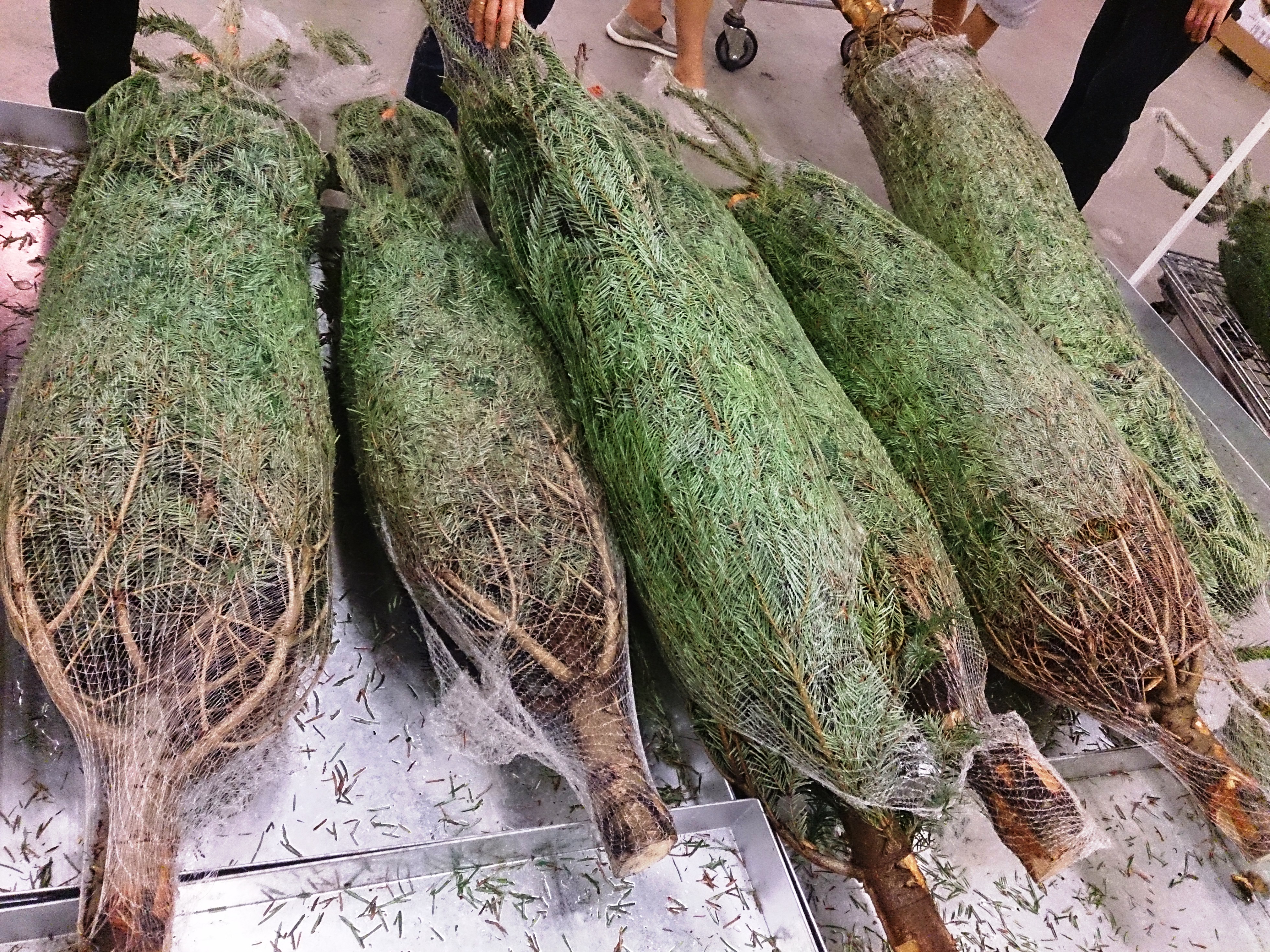
Image from Wikipedia
is, and which era's traditions you mean!  A non-musical example would be the tradition of putting up Christmas trees.  Did we always do it?  Not before Victorian times!


Back to music, though - the best way to find out about what was traditional in days gone by, is to look at historical resources.   These are some useful ones for students involved with traditional Scottish music:-

William Tytler of Woodhouselee was an antiquarian who wrote about Scottish music. He wrote a very famous essay, A Dissertation on the Scottish Music (1779 and republished in later books) – find it on Archive.org here.  We have commented on the Dissertation on this blog before - see here.

And here are some particularly interesting early collections to look at - we have them all in the Whittaker Library.  Karen 'liberated' them for a couple of very lively seminars with our first and second years this morning, but all the books are back in the library again now.  Look at the paratext (prefaces, footnotes, indices etc) as well as the musical text - it's often very informative:-

  • Joseph MacDonald – Compleat Theory of the Scots Highland Bagpipe (c.1760) 
  • Patrick McDonald A Collection of Highland Vocal Airs [“The Patrick McDonald Collection”] (1784)     
  • Joseph Ritson – Scotish Song Vols.1-2 (1794)
  • William Dauney – Ancient Scotish Melodies   (1838)
  • George Farquhar Graham - Songs of Scotland Vols 1-3  (1848-9)
  • Ludwig van Beethoven – Collected Edition 11/1
  • George Thomson – A Select Collection of Original Scottish Airs for the Voice   
  • The Language of Folk Vols 1&2 (Faber, 2013)  
  • Marjory Kennedy Fraser’s collections


Monday, 1 September 2014

Because You Need Instant Access to Your Favourite Websites

Diigo

Karen has just been telling a colleague about Diigo, and we thought it might interest you too. Basically, it is a way of saving all your favourite weblinks "to the cloud", so that you can access them via any device anywhere. You can add keywords and save to different folders in your account, to help you retrieve the links later.


  • This is Karen's Diigo account, built up over several years: Click HERE.
  • And this is the Diigo homepage if you want to start your own account. Personally, we think it's brilliant. 

We are the Whittaker Library, helping our performing artists and technicians access and organise the information they need for their teaching and learning. 

Thursday, 27 February 2014

Website Not Coming Up? Ask here: Is It Down Right Now

http://www.isitdownrightnow.com/

If a website doesn't open, don't panic. It may not be your computer's fault.  This very handy website gives you status updates, even telling you if it's just your country that is affected, or further afield.  Excellent!

Monday, 10 June 2013

Academic Integrity, Plagiarism, or Simple Misunderstanding

An article in the Times Higher Education magazine suggests students don't always mean to plagiarise, but actually don't understand what counts as plagiarism.

Read "I'm no plagiarist, I moved a comma", by Elizabeth Gibney (THE 6 June 2013).

There's another Whittaker Live posting about academic integrity, which we posted on 20 May.  Read it here:-

Academic Integrity and Internet Searching

Monday, 20 May 2013

Academic Integrity and Internet Searching

Yesterday, 'Whittaker' found an interesting article online for his own research.   He didn't recognise the name of the place where the author was working.  All was well, though: it turned out to be a department in an American university - the name was just a bit unusual.  The author was bona fide, too; and finally, the article was indexed in RILM - so was likely to be trustworthy.

So, if you're researching a subject, here are two useful principles to guide you on your way:-


  1. Check out the source of the information.  Is it likely to be reliable? 
  2. Quote the source of the information, so people can see where you got it from!  All a question of academic integrity.
Postscript. Since posting this, 'Whittaker' notes a recent article in Times Higher Education, on this very subject.  Read it here:-

'I'm no plagiarist, I moved a comma'
By Elizabeth Gibney, THE, 6 June 2013.

Monday, 25 February 2013

The Scots Language: Guest Blog by Wojciech Gardela

After blogging about Scots pronunciation, a few days ago, 'Whittaker' was offered further advice on the Scots language.  So much useful advice, in fact, that it merits a blogpost of its own. So here is a guest blogpost by Wojtek Gardela, Lecturer in Scots Language at the Royal Conservatoire of Scotland.

Pronunciation, Dictionaries and Online Resources
 
  • The online Dictionary of the Scots Language (DSL) has pronunciations, depending on the region. They're in square brackets, but are not given for every word. 
  • While using the DSL, you can also look up words using the SND + SND Supplement searches, as this will give pronunciations of words from 1700 onwards (i.e. Modern Scots), where such pronunciations are available. 
  • There's ongoing work on a newer version of the DSL, but it only contains material for Older Scots (i.e. up to 1700).
  • An alternative may be a paper copy of the Concise Scots Dictionary (CSD), which, as far as I remember, has more pronunciations.   (Here is our Whittaker Library copy in the catalogue.)
     
  • You should remember, though, there are a number of non-linguistic dictionaries of Scots on the market, too (published under various names), but only those published by the Scottish Language Dictionaries are 'official' and most comprehensive, backed up by decades of evidence gathering by specialists in the field.
  • There are more publications by the Scottish Language Dictionaries here: http://www.scotsdictionaries.org.uk/Publications/index.html
  • Although I don't know of any books that would give International Phonetic Alphabet pronunciations of Scots words, info on IPA can be found here, if you're interested in phonetics:- http://www.langsci.ucl.ac.uk/ipa/index.html

There are also other websites, which are not dictionaries but may be helpful to those studying Scots song - see below.

Websites which may assist in studying Scots song

Lastly, Wojciech has recommended a new Scots language book - Modren Scots Grammar, by Christine Robinson. It was launched literally last week, and we're ordering a copy of it.  (If you have a Kindle, you can buy a copy in Kindle format at a lower price.)