Library and Information Services, Royal Conservatoire of Scotland

Friday, 15 August 2014

It Means "The Worlds" To Us (The World Pipe Band Championships)

The Worlds homepage 


Just now, if someone mentions "The Worlds", they aren't talking about the universe, the cosmic galaxy or anything of that nature.  "The Worlds" are a pipe band championship that takes place in Glasgow.  So this is why there was a pipe and drum band in the Thistle Hotel Car-Park late yesterday afternoon ...

The Whittaker Library does have a more than a few CDs of pipe bands, for our staff and students to enjoy when the championships are over ... CLICK HERE.

We are the Whittaker Library at the Royal Conservatoire of Scotland, here to assist with the information requirements of our performing arts community. 

The Orchestral or Choral Librarian's Best Friend

 ENCORE

 
Screenshot of Encore homepage. See link below.
http://www.iaml.info/iaml-uk-irl/projects/encore.html


If we need to borrow a set of orchestral or choral music, or if societies ask us to recommend a cheaper way than a commercial hire, then a good place to look is Encore.  

Encore is a union catalogue of choral and orchestral sets in libraries.  The precise loan arrangements can vary - some libraries will lend directly to choirs and orchestras for a fee, generally much less than a commercial hire.  Others require the arrangements to be made between libraries, on behalf of their patrons.

Not all libraries do lend to one another, but if you find a piece of music on Encore, then it is generally available to be borrowed so long as it's not already in use at the time you want it.

It's good for standard repertoire.  Obviously if something is only available through the publisher's hire library, then you won't find it cheap on Encore!

Thursday, 14 August 2014

Sometimes You Need Information Immediately

... And our new Whittaker Library website helps you do just that.  There are various pages depending on what you're looking for - our opening hours, our electronic databases, electronic journals, and more.

Of course, our contact details are also there, so don't hesitate to get in touch if you need more info about anything.


Information Knows No Boundaries
 
Besides all the digital, online media, we have still got tons of sheet music, recorded music and DVDs, books and plays, and the staff here will always help you find your way around the catalogue.

We are the Whittaker Library at the Royal Conservatoire of Scotland, here to help our performing arts community access the info they need for their teaching and learning.  

How to Get Free Sheet Music

We subscribe to Alexander Street Press Classical Scores Library Collections 1 and 2.  That means our staff and students can download anything they find there.  There's classical music for everyone, whatever they sing or play.  Do take a look.  (If you're accessing these links from off-campus, you'll need to login.)

.
We are the Whittaker Library at the Royal Conservatoire of Scotland - here to help our performing arts community with their information needs! 

Singers! Instantly track down that Aria - The Aria Database


Singers will feel right at home here!  Who wrote that aria? What opera is it in? Who wrote the libretto?  Are there recordings?  The Aria Database is a free resource to help you.
Staff and students at the Royal Conservatoire of Scotland will probably be very familiar with IPA Source, which gives you transliterations, phonetic pronunciations and so on.  It's fabulous, but our subscription is only available on campus.  Therefore, The Aria Database might be a useful fallback for those away-days when you need aria information in a hurry.

Save IPA Source (International Phonetic Alphabet) and The Aria Database to your favourites, and you've got arias just about covered!


Composer Peter Sculthorpe - Obituary on IAML website


Jennifer Ward, of the International Association of Music Libraries Web Team, has posted a modest tribute to Peter Sculthorpe on the IAML website right now.  
 Jennifer linked to Michael's reference to the newsletter as well as a radio interview, an online exhibit from the National Library of Australia, and his composer page at the Australian Music Centre.
 --------
Whittaker Library patrons wishing to peruse some of Sculthorpe's compositions will find a listing in our catalogue, HERE.

Because You Love Piano Music ...

We subscribe to Alexander Street Press Classical Scores Library Collections 1 and 2.  That means our staff and students can download anything they find there.

We did an Advanced Search for Piano Sonatas - and look what we found! (If you're accessing these links from off-campus, you'll need to login.)

But it's not just piano music - there's classical music for everyone, whatever they sing or play.  Do take a look. 
.
We are the Whittaker Library at the Royal Conservatoire of Scotland - here to help our performing arts community with their information needs! 

Awesome! Free Lieder Scores for RCS Staff and Students!

We subscribe to Alexander Street Press Classical Scores Library Collections 1 and 2.  That means you can download anything you find there.

We did an Advanced Search for Lieder.  Just that one word - and look what we found!

But it's not just vocal music - there's classical music for everyone, whatever they sing or play.  Do take a look.  (If you're accessing these links from off-campus, you'll need to login.)


Let Glasgow Flourish - Composer John Maxwell Geddes

Let Glasgow Flourish 

(by the Preaching of His Word and the Praising of His Name)*


Considering we've just hosted the Commonwealth Games in Glasgow, it's nice to catalogue a brass ensemble piece entitled, "Let Glasgow Flourish" - the opening words of the city motto.

John Maxwell Geddes is a local composer, and a former lecturer of the Royal Conservatoire of Scotland (formerly RSAMD)

Coming up soon - John Maxwell Geddes, 'Let Glasgow Flourish' for brass and percussion.

* Glasgow City website - our mottos

Wednesday, 13 August 2014

Are you a Fan of the Pipes? Piping Live is on this week

Piping Live Festival this Week

Since our nearest neighbours are currently in the throes of Piping Live, we offer you an insight into the bagpipe music that we have in the Whittaker Library.

Search for Bagpipe or Bagpipes and you find THESE ...

Caution: don't play them too loud - you might annoy the neighbours!


Tuesday, 12 August 2014

Awesome! How Teens Learned to Dance

Times Digital Archive Available to Scottish Performing Arts Students

 We've just subscribed to a great new e-resource - the whole Times newspaper archive from 1785-2008.  What's it useful for?  It's only limited by your imagination!

For example, you could read a book review to see if a book's worth reading!  We don't have "Renaissance Theatre Costume" in stock, but we could always try to obtain it ...
.


.
You could find historical info, like the story of the Scottish National Theatre.  Or read concert reviews - maybe trace the first performance of a piece. Or find out how your ancestors learned social dancing.  In 1801, your mum might've contacted these guys via the small ads!


 .

We are the Whittaker Library at the Royal Conservatoire of Scotland.  Here to help our performing artists source information for their teaching and learning needs.

Monday, 11 August 2014

Can't Get Enough Music? Alexander Street Press Uploads Even More!

We subscribe to Alexander Street Press's Premium streaming service, so our staff and students can stream a wide range of music, videos, and download classical scores too.  Today we got news that loads more recordings have just been uploaded - fantastic!

"We have released 252 titles (3,843 tracks) in Classical Music Library from a wide variety of labels including Nimbus, Haenssler Classic, Telarc, and Chandos. This content is available worldwide! New titles include:

Some more figures to astonish and amaze you:- Music Online (Rest Of World minus Japan) now has ... 6,900,000 tracks (AVERAGE); 1,964 hours of video; 45,632 scores (1,014,480 pages); and 124,091 pages of text reference. And that's quite a lot!

Cool Capers for Clarinetists (and Clarinettists)

We encountered Heather Roche on Twitter today.  Her blog offers a whole wealth of tricky clarinet techniques - awesome.  Take a look for yourself:-


Sunday, 10 August 2014

Musical Limericks for One and All

Do you remember the series of musical limericks we posted here a couple of years ago?  Blogging about clarinet techniques suddenly reminded us that there are loads of them - woodwind, brass, strings, singers - no-one escaped.

CLICK HERE - just as a diversion!  

New Limerick - The Music Librarian

(IAML made us do it! )

There once was a music librarian
Whose image was never a scary 'un. 
But on a bad day, if the weather was gray, 
She was frizzy and stare-ey and glare-y then. 

What Makes A Good Blog? Twelve Tips for Library Bloggers

WHAT MAKES A GOOD BLOG?

We looked at our blog traffic over the past month.  How many people actually visited, and were there any patterns?  Well yes, actually – there were!

  1. The bottom line is, you have to keep posting.  If you don’t post, the visitors don’t visit.  The more you post, the more they visit. 
  2. Schedule your blogposts! You can schedule in Blogger and Wordpress.  This helps take care of days when you know you won’t be around to post.
  3. Be sure to share your posts on Twitter, and use something like Bufferapp to schedule tweets too:  http://bufferapp.com
  4. Take care with headings.  Once you’ve uploaded your post, the hyperlink won’t change. So use catchy headings with words that Google can find; you can change the blogpost heading later if you need to.
  5. Always add keywords/tags.  Try to make these consistent over time.
  6. Know your audience – what makes them tick?
  7. Know your product – we’re a library, so our main concern is to promote physical and electronic resources, not to mention our ever-helpful library staff! 
  8. In a library context, e-resources attract interest.  So does copyright, interesting new stock, musicians’ health, music competitions, creativity, learning and research skills, and employability. 
  9. Weblinks are good.  Readers want to know where they can find more.
  10. Don’t try to write a scholarly essay, and keep the blogposts a reasonable length.
  11. Have a conversational tone: expressions like “the musicologists amongst us” are not inclusive, and won’t really even attract the musicologists!  You want readers to react with, “Hey, this is for me!”, and not “Oh, stuffy academics again”. 
  12. Be the same age as your audience.  No, that’s silly – obviously we’re kidding!  Your audience could be any age.  Students can be any age.  Staff can be marginally older than students, or heading for retirement.  You cannot be the same age as your audience, but you can try to ensure that your posts will appeal to as wide an audience as possible.


Don't Tell Your Mum (You've Bought Hearing Protection Without Being Reminded!)

Musicians these days take care of their hearing - simple as that.  Find out more on the Action on Hearing Loss website.  HERE.

It's cool to look after your lugs!

Friday, 8 August 2014

Music of War - A Conference

 The Music of War: 1914–1918 

Conference, 29-31 August 2014 

  British Library.

"A final reminder that *The Music of War: 1914–1918* conference takes place from 29-31 August 2014 at the British Library.

"Held as part of the British Library’s Centenary events programme, the conference includes a screening of the WWI silent film ‘Pax Aeterna’, the performance ‘War, Women and Song’, and a wine reception.

"To view the programme and register for the conference, please visit: http://www.themusicofwar.org

Keynote speakers:
Dr Kate McLoughlin (Birkbeck, London)
Professor Rachel Cowgill (Cardiff University)

Roundtable Session:
Professor Rachel Cowgill (Cardiff University) Lewis Foreman Professor Barbara Kelly (Keele University) Dr Kate Kennedy (University of Cambridge) Chaired by Dr Toby Thacker (Cardiff University)

For conference-related enquiries, please contact: themusicofwar@gmail.com

Generously supported by:
The British Library
Royal Musical Association
Music & Letters Trust
The Oxford Research Centre in the Humanities

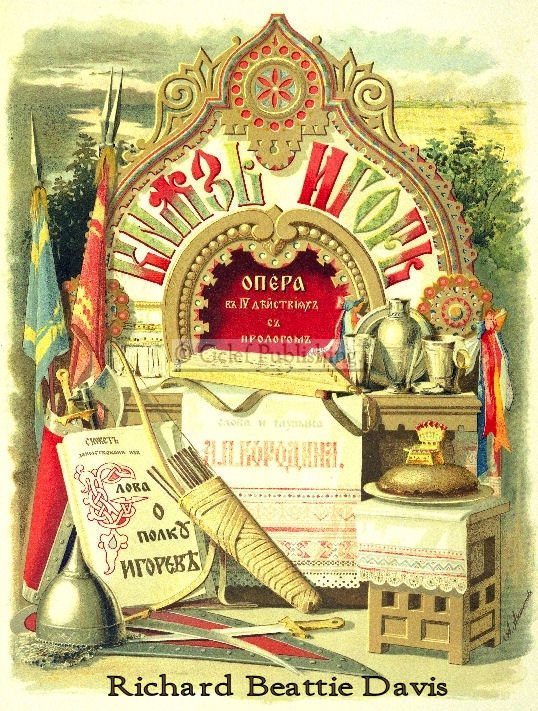
The Beauty of Belaieff, by Richard Beattie Davis

The historic Russian music publishing house, Belaieff, produced startlingly beautiful covers for their scores.  The Whittaker Library at the Royal Conservatoire of Scotland has today been gifted a copy of the late Richard Beattie Davis' book, The Beauty of Belaieff.  

Like the collection, the book itself is beautiful. 


  •  More about the book itself HERE.
  • Find it in our collection, HERE

Richard Beattie Davis (1922-2008) was an English musicologist and collector.  His collection is now in Florida Atlantis University - the Davis Music Collection.


Book Review


A lifetime’s dedicated research has gone into Richard Beattie Davis’s magnificent book, The Beauty of Belaieff.  Describing Mitrofan Petrovich Belaieff as ‘more an enabler than a creator’, Davis documents the impressive music publishing house that this wealthy timber merchant established in middle life.  Belaieff’s publishing output is in itself a record of an epoch in Russian music, and Davis’s book devotes chapters to each of the 18 composers that Belaieff promoted.


The publication in colour of over one hundred and fifty title pages makes this volume handsome enough to merit the epithet, ‘coffee-table book’ as well as being a serious study, for these illustrations both enhance and inform the extensive text.  Music title pages are a rather unique art-form, and although this volume is not a history of Belaieff’s commissioned art-work per se, it goes without saying that Davis does provide commentary on them.

Davis systematically collected Belaieff publications on a grand scale, and his research embraced published histories, reference works, a vast amount of correspondence between Belaieff and his composers, not to mention extensive library visits.  It is gratifying, and humbling, to consider that Davis's initial researches in Westminster Music Library, and then in other libraries, were to bear fruit in such an admirable monograph.  Books of this stature are a welcome endorsement of the importance of specialist music libraries to music-lovers and researchers, and underline not only their important function of retaining old and perhaps forgotten music for posterity, but also the ‘enabling’ role that their staff are able to offer.

Dr Karen E. McAulay