Library and Information Services, Royal Conservatoire of Scotland

Showing posts with label Russia. Show all posts

Thursday, 14 April 2016

Shakespeare in Russia - Shakespeare and Scotland


Shakespeare on the Russian Stage: Photographic Exhibition

In celebration of Shakespeare 400, the Royal Conservatoire of Scotland in collaboration with The Russian State Art Library,  with kind support of the Art Fund present an exhibition of images from the state art collections of the Russian Federation - “Shakespeare on the Russian Stage”.  The exhibition highlights Shakespeare as an international figure in world drama, with photographs and drawing images from Theatre Yugo-Zapad, Theatre Satirikon and the Moscow Arts Theatre among others.  The exhibition is in two parts with images of Hamlet, which is the most performed play globally and also a digital display of other Shakespearean productions in Russia.

The exhibition will run in the Cafe Bar until the 26th May 2016.

Mere Players: an Exhibition ... 

A complementary exhibition has been mounted to share some of our Shakespearean Ephemera from the Conservatoire's Archives and Collections.  On Level 2, round the corner from the Whittaker Library. 


A Symposium on Shakespeare and Scotland

On Friday 22nd April, why not nip over to the University of Glasgow to take in a symposium on Shakespeare and Scotland?  Details below ...
Shakespeare and Scotland
Symposium: Friday 22nd April
Andrew Stewart Cinema, Gilmorehill Halls, University of Glasgow

Marking the 400th anniversary of Shakespeare’s death, Theatre Studies at Glasgow University is hosting a one-day symposium. The symposium aims to explore the relationship and dialogue between Shakespeare and Scotland, to explore different approaches to adapting Shakespeare for the Scottish stage and, above all, to celebrate the Shakespeares of Scotland. To book a place please email: Victoria.Price@glasgow.ac.uk
This event is part of New Dreams - a festival of events to celebrate the life, work and legacy of Shakespeare.

Friday, 8 August 2014

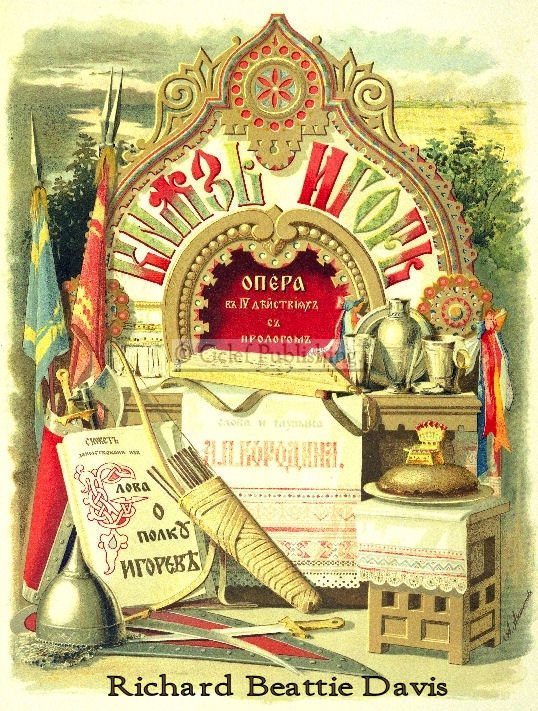
The Beauty of Belaieff, by Richard Beattie Davis

The historic Russian music publishing house, Belaieff, produced startlingly beautiful covers for their scores.  The Whittaker Library at the Royal Conservatoire of Scotland has today been gifted a copy of the late Richard Beattie Davis' book, The Beauty of Belaieff.  

Like the collection, the book itself is beautiful. 


  •  More about the book itself HERE.
  • Find it in our collection, HERE

Richard Beattie Davis (1922-2008) was an English musicologist and collector.  His collection is now in Florida Atlantis University - the Davis Music Collection.


Book Review


A lifetime’s dedicated research has gone into Richard Beattie Davis’s magnificent book, The Beauty of Belaieff.  Describing Mitrofan Petrovich Belaieff as ‘more an enabler than a creator’, Davis documents the impressive music publishing house that this wealthy timber merchant established in middle life.  Belaieff’s publishing output is in itself a record of an epoch in Russian music, and Davis’s book devotes chapters to each of the 18 composers that Belaieff promoted.


The publication in colour of over one hundred and fifty title pages makes this volume handsome enough to merit the epithet, ‘coffee-table book’ as well as being a serious study, for these illustrations both enhance and inform the extensive text.  Music title pages are a rather unique art-form, and although this volume is not a history of Belaieff’s commissioned art-work per se, it goes without saying that Davis does provide commentary on them.

Davis systematically collected Belaieff publications on a grand scale, and his research embraced published histories, reference works, a vast amount of correspondence between Belaieff and his composers, not to mention extensive library visits.  It is gratifying, and humbling, to consider that Davis's initial researches in Westminster Music Library, and then in other libraries, were to bear fruit in such an admirable monograph.  Books of this stature are a welcome endorsement of the importance of specialist music libraries to music-lovers and researchers, and underline not only their important function of retaining old and perhaps forgotten music for posterity, but also the ‘enabling’ role that their staff are able to offer.

Dr Karen E. McAulay