Wednesday, 15 April 2015
Quick Shout Out - Calling All RCS Students and Staff!
We're doing our annual Library Customer Satisfaction Survey: all staff and students have been emailed a link, so please let us know what you think!


Monday, 13 April 2015
Live Pipes, Recorded Clarsach, Eminent Scottish Composers
If you are interested in Scottish music, why not consider attending the Musica Scotica conference - in Glasgow this year. There are a wide range of papers from trad to classical, ancient to modern, including live and recorded performances.
MUSICA SCOTICA
Saturday 25th - Sunday
26th April,
St Mungo's Museum of Religious Life and Art, Glasgow
 Your
Musica Scotica conference application form is now online!
Your
Musica Scotica conference application form is now online!
http://www.musicascotica.org.uk/conferences.shtml (Scroll to bottom of the page.)
The form should be completed and mailed with your payment to Graham Hair, whose contact
details are on the form. There are no online payment
facilities.
SPEAKERS' INSTRUCTIONS
Speakers have all been emailed, but if you haven't received an email, contact Musica Scotica using the website contact email.
ALL DELEGATES
1.
The Saturday sessions are from 9.30
to 17.20, followed
by a trip to Hyndland for a
performance of John Maxwell Geddes's Castle Mills Suite (from 18.00 to
18.45).
2.
Saturday dinner is not provided, but there are
plenty of eateries in the vicinity, should you wish to dine with convivial
company after the performance.
3.
The Sunday sessions commence at 9 am, with a
mid-morning coffee break, and end with lunch at 13.15.
Friday, 10 April 2015
Presto Classical release "Luminate" as Live Music Now Scotland celebrates 30 years

Look out for this new Delphian CD in the Whittaker Library - Live Music Now Scotland is an organisation that promotes the work of stellar young artists, and the album features many names well-known in our performing arts community. The Library will be ordering it today!
A foretaste from the Presto Classical website:-
Luminate - Live Music Now Scotland celebrates 30 years
Emma Versteeg (soprano), Maryam Sherhan (piano), Laura Margaret Smith (mezzo-soprano) & Geoffrey Tanti (piano)
Astrid String Quartet & Spencer-Strachan Duo
Thursday, 9 April 2015
Ever had a Vocal Sound Bath?
Singers, here's a Glasgow event for you - next Saturday, 18th April in Kinning Park.
Composer Nichola Scrutton is organising a Vocal Sound Bath to celebrate World Voice Day. Visit her website to find out more about the event!
Composer Nichola Scrutton is organising a Vocal Sound Bath to celebrate World Voice Day. Visit her website to find out more about the event!
Friday, 3 April 2015
Whittaker Library Open 9-5 Tuesday to Friday this Week (7-10 April)
Don't Panic!
The Library is operating holiday hours this week - we're open 9-5, Tuesday to Friday. Normal hours recommence on Monday 13th April.
Were you intending to start working on that essay assignment?
Our staff and students can visit the electronic resources on our library web-pages to access all the premium online materials that we subscribe to on your behalf. There's a page for databases, indexes, streamed music and video etc - and another page for our electronic journals. Click HERE. Almost everything is available off-campus, though you'll need your institutional login - that's the login you use every time you access an RCS computer.
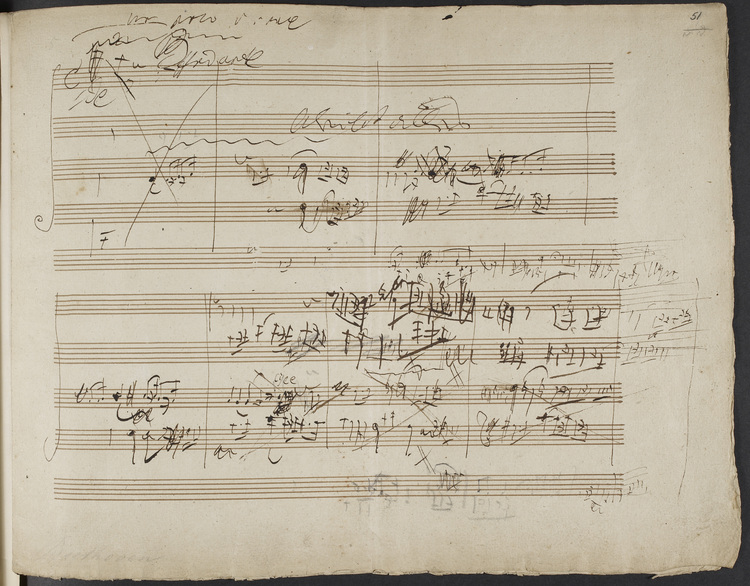
If you're one of the lucky students writing an essay on Stravinsky or Beethoven, please stay on this Whittaker Live blog, as there are several posts offering you helpful advice as to where you can gather information.
Thursday, 2 April 2015
The Boundless Energy of Niel Gow and Sons
Anyone involved in the Scottish music scene knows that Niel Gow and his sons - particularly Nathaniel - produced an enormous amount of fiddle music to dance to.
- Take a look at IMSLP and be amazed.
- Find out what motivated those fiddling Gows! Here's a new posting from the Bass Culture project about Niel and Nathaniel Gow's controlling influence.
- And another posting about Nathaniel's diversion into Scottish song repertoire: Nathaniel Gow's "small share of trouble".
- When the Bass Culture website goes live this autumn, there will be much, much more digitized fiddle music for you to exclaim over at http://hms.scot (At the moment it's just a holding page.)
Stravinsky and that Russian Sound
Our BMus third year students are working on essays about Stravinksy and Beethoven - and we've just obtained a new book that'll be very useful to them:-
We are the very helpful Whittaker Library at the Royal Conservatoire of Scotland, doing our very best to support our staff and students' information needs.
Pieter C. Van den Toorn and John McGuinness
Stravinsky and the Russian period: Sound and legacy of a musical idiom
(Cambridge: Cambridge University Press, 2012)
We also already have Toorn's book on Stravinsky's The Rite of Spring. (But then, we've got rather a lot of books about Stravinsky altogether - look here!)We are the very helpful Whittaker Library at the Royal Conservatoire of Scotland, doing our very best to support our staff and students' information needs.
Monday, 30 March 2015
How to Source Information for your Music Essay
 |
| Igor Stravinsky |
 GENERAL HELP WITH
RESOURCES FOR MUSIC HISTORY 3 ESSAY
GENERAL HELP WITH
RESOURCES FOR MUSIC HISTORY 3 ESSAY
... So we’ve been looking at the Music History 3 essay questions to
see how our online resources could help you.
Just about everything
you need is here, available 24:7
- Online databases and music streaming: http://www.rcs.ac.uk/about_us/libraryandit/databases/,
- Electronic journals: http://www.rcs.ac.uk/about_us/libraryandit/e-journals/)
- You can often find a score online. Use your computer’s snipping tool to copy little excerpts for examples. We subscribe to Alexander Street Press Classical Scores Library (accessible online wherever you are), and Library Music Source (accessible on site). You probably already know about IMSLP (the Petrucci library), too.
- If a piece of music has an English title as well as its original title, search both.
- You can look for information in Groves Dictionary – it’s part of Oxford Music Online.
- You can also find useful information on JSTOR. Be clever with your searching – if the essay is asking you to link concepts (eg Liszt and literature), make sure your search terms reflect that.
- If JSTOR hasn’t got what you want, don’t give up. Try RILM (music abstracts). HINT: The advanced search will get better results than the simple one! The SmartText searching option is good for finding adjacent words in a phrase. If you only read material in English, or another language, you can factor that into your search, too.
- There’s nothing wrong with older literature, if it informs the question you are answering. However, do remember that opinions may have changed, if an article is very old indeed!!
- Search keywords in our catalogue. Start with a precise search (eg the composer’s name and perhaps the piece) then broaden it if you don’t get what you need. If you don’t find the right information under a composer’s name, try MUSIC HISTORY - and maybe the century you’re interested in. If you’re off-site, limit your results to e-books to see if there’s anything you can read online.
- You can stream music by Naxos or Alexander Street Press Music Library. Check our e-resources page. http://www.rcs.ac.uk/about_us/libraryandit/databases/
- There are also plenty of electronic journals on the e-journals page. Start by looking for suitable journals under the List of Music Titles. http://www.rcs.ac.uk/about_us/libraryandit/e-journals/
How To Cite References, Chicago Style
Our RCS music students are encouraged to develop a consistent citation style, such as the Chicago (also called Turabian) style. This means that if you quote from a book or article, you put a footnote number after the quotation, and the details go in the footnote at the bottom of the page.
Here's a useful summary shared with us by Dr Peter Argondizza. He sourced it from the University of Wisconsin at Madison:-
Here's a useful summary shared with us by Dr Peter Argondizza. He sourced it from the University of Wisconsin at Madison:-
Our BMus third year students are working on essays about Stravinksy and Beethoven. Here's a quote from a book about Stravinsky, followed by the footnote telling you where the quote comes from. (The book itself is actually here, waiting to be labelled and shelved in the Whittaker Library, so watch those shelves!):-A Guide to Chicago or Turabian Documentation Style / The Writing Centre, University of Wisconsin
"His initial impulse was to reproduce the sound of a Russian peasant band" 1
____________________________________________________
1 Pieter C. Van den Toorn and John McGuinness, Stravinsky and the Russian period: Sound and legacy of a musical idiom (Cambridge: Cambridge University Press, 2012), 75
Friday, 27 March 2015
RCS Alumnus Simon McKerrell Touches on Intangible Heritage
ICH means Intangible Cultural Heritage
... read what it means for Scotland
Intangible Cultural Heritage is a bit of a buzzword in creative circles these days. A few weeks ago, the Scottish Storytelling Centre held a workshop about the kind of cultural heritage that you can't physically touch, or see, but rather experience as part of oral or inherited tradition. Read a delegate's reflections after the event, here.
Now piper Simon McKerrell, alumnus of the Royal Conservatoire of Scotland and lecturer at the University of Newcastle, takes up the theme in his latest blogpost:-
224 years ago, this is what German Children Sang!
Please Meet Placidus Partsch!
We're attacking our cataloguing piles today! Karen assigned herself a big pile of collected editions and rolled her sleeves up. At the bottom of the heap was Liedersammlung fur Kinder und Kinderfreunde am Clavier: Fruhlingslieder and Winterlieder, dating from 1791. The introduction explains that the collection was compiled for children to sing, or for older children and adults to sing to younger ones. So - this is intended as nursery repertoire, 1791-style! It's fascinating! The very first song is one set by Mozart - not the only one - and you might recognise the names of Vanhal and Hoffmann. (The others are no longer exactly mainstream.) The compiler, a man with the enviable name of Placidus Partsch, set himself the task of assembling 30 songs for each season, but only the spring and winter volumes survive.
You can find them in our catalogue HERE, and they're shelved as part of the Recent Researches in the Music of the Classical Era series, vol.95, published by A-R Editions.
Thursday, 26 March 2015
Spring Break Essays? Did you look quickly at JSTOR then give up?
This posting offers advice to students at the Royal Conservatoire of Scotland, many of whom have music history essays to write during the spring break!
Everyone tells you JSTOR is great, right? So you look, and either there's too much, or not enough.
Also, by using Advanced Search, you can be more specific about what you want. For example, rather than flinging Beethoven Quartets into the simple search box, you could specify that Beethoven must appear in the title of an article, and Quartets can appear anywhere in the full text. Obviously if you're too specific, you can end up limiting the search too much, but it's certainly worth playing with those search boxes!
If you do all that and then can't access the article you've found, contact your library. We're happy to look into any difficulties our students encounter.
And here's another useful tip:- keep a note of the references you find. You can list them in your bibliography, including the hyperlinks if necessary.
Everyone tells you JSTOR is great, right? So you look, and either there's too much, or not enough.
Search Smart!
Once you've accessed JSTOR (directly on-site or using your institutional login off-campus), make sure you're only searching for items we can access - there's a button to click.Also, by using Advanced Search, you can be more specific about what you want. For example, rather than flinging Beethoven Quartets into the simple search box, you could specify that Beethoven must appear in the title of an article, and Quartets can appear anywhere in the full text. Obviously if you're too specific, you can end up limiting the search too much, but it's certainly worth playing with those search boxes!
If you do all that and then can't access the article you've found, contact your library. We're happy to look into any difficulties our students encounter.
And here's another useful tip:- keep a note of the references you find. You can list them in your bibliography, including the hyperlinks if necessary.
Free Scores for RCS Music Students!
Okay, everyone knows about IMSLP, otherwise known as the Petrucci Music Library. It's free. (Check that you're not breaching copyright in the country where you live).
If you're a university or conservatoire music student, your library may well subscribe to additional, premium, services offering you more "free" music. (The library pays, so patrons don't have to.)
If you're a university or conservatoire music student, your library may well subscribe to additional, premium, services offering you more "free" music. (The library pays, so patrons don't have to.)
FREE SCORES FOR RCS MUSIC STUDENTS!
Get music free online
through Alexander Street Press Classical Scores Library - if you’re off-campus,
you’ll need to login first.
Classical Scores Library, Volume I* (part of
the MOP collection)
Classical Scores Library, Volume II* (part of the MOP
collection)
Alternatively, if you
search the whole Alexander Street Press music database, you’ll find
videos, recordings AND these scores. Start
here, selecting the music drop-down before you search:-
Look down the side to single out videos, audio or scores.
MORE FREE SCORES TO
DOWNLOAD ON-CAMPUS
Download sheet music
from LibraryMusicSource (on-campus only):
ESSAY TO WRITE? COPY EXCERPTS FROM THESE SCORES!
Use your computer’s “snipping tool” to copy little excerpts for musical examples to back up your arguments or illustrate what you're describing.
Subscribe to:
Posts (Atom)